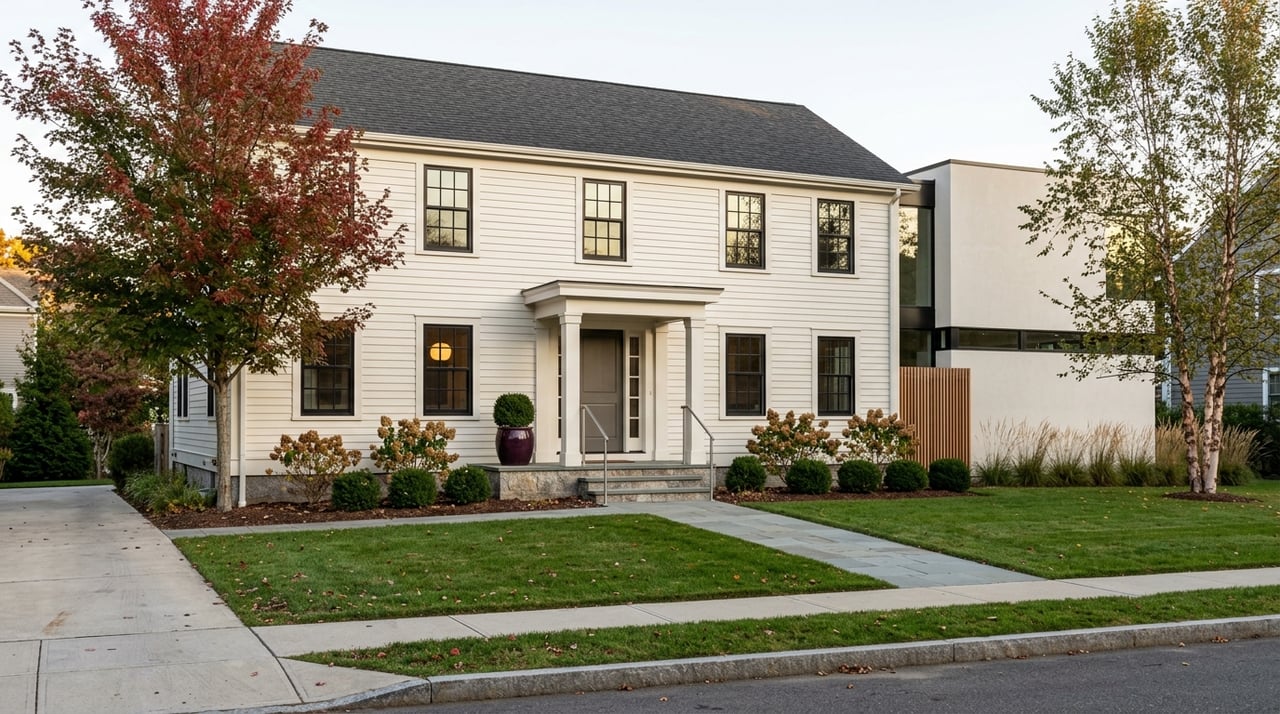
Newton MA Neighborhoods Guide to Villages and Homes
July 2, 2026
July 2, 2026
Wondering which Newton village fits your lifestyle and housing goals? You are not alone. Newton can feel hard to decode at first because it is not built around one downtown, and each village has its own housing mix, commute pattern, and architectural character. This guide will help you understand how Newton is organized, what kinds of homes you are likely to find in different areas, and what that can mean if you are buying or selling. Let’s dive in.
Newton is organized around 13 villages rather than one central downtown. According to the city, its growth followed rail stops, Charles River mills, and major thoroughfares, which created a patchwork of village centers and surrounding residential streets.
For you as a buyer or seller, that matters a lot. Village centers often include older storefronts, smaller-unit housing, and some newer mixed-use infill, while nearby side streets hold much of Newton’s single-family inventory. In simple terms, the housing style often changes within just a few blocks.
Newton has also made transit-adjacent housing a planning priority. In December 2023, the city adopted the Village Center Overlay District, which allows by-right housing and commercial opportunities near transit, amenities, and gathering spaces in areas that include Auburndale, West Newton, Newtonville, Newton Centre, Newton Highlands, Eliot, and Waban.
That gives you an important lens for comparing villages. If you want a more traditional single-family setting, one group of villages may stand out. If you want a condo, apartment, or lower-maintenance option near shops and transit, a different set may be a better fit.
Newton Centre is one of the clearest examples of Newton’s village pattern. The city notes that its late-19th-century growth produced large suburban residences, including Shingle, Queen Anne, Colonial Revival, and transitional styles.
At the same time, the village core includes commercial buildings reused for shops, offices, and restaurants, and the city identifies Bradford Court Apartments, built in 1913, as the first apartment building in Newton Centre. That mix makes Newton Centre appealing if you want classic architecture with some condo or apartment potential near the center.
For sellers, this variety can be a real advantage. Buyers are often drawn to the combination of established housing stock, village activity, and Green Line access.
Newton Highlands grew rapidly after the Highland Branch was completed in 1886 and the station opened in 1887. The city describes housing here as strongly tied to that commuter-era growth, with Queen Anne, Shingle, and Colonial Revival homes lining streets planned for suburban residents.
If you are looking for a classic late-19th-century neighborhood feel, Newton Highlands is one of the stronger matches. It has a strong single-family emphasis and direct Green Line access, which can make it especially attractive for buyers balancing house style and commute convenience.
Waban shares a similar rail-driven history. The city says many homes there range from Shingle and Colonial Revival to early-20th-century Craftsman, giving the area a fairly cohesive architectural identity.
For many buyers, Waban reads as lower-density and distinctly residential. If your wish list includes a classic house near transit, Waban is often part of the conversation.
West Newton reflects Newton’s commuter-suburb history in a very visible way. The city ties its development to Washington Street and the Boston & Worcester Railroad, with early Greek Revival and Italianate houses followed by Second Empire and Queen Anne styles.
The area also remained a center of civic life, and West Newton Hill includes more than 200 historically intact houses in two historic districts. If you are drawn to architectural variety and period homes, West Newton offers one of Newton’s richest historic housing stories.
Auburndale developed as a suburban commuter village after passenger rail reached Newton. The city says prominent styles include Italianate, Second Empire, Shingle, and Colonial Revival, and many historic properties sit on large suburban lots.
That often makes Auburndale relevant for buyers who want more lot size and a traditional suburban feel. Its location near the Charles River is also part of its long-standing identity.
Newtonville is often one of the more flexible villages from a housing-type perspective. The city’s historic materials show a wide range of late-19th- and early-20th-century styles, including Greek Revival, Mansard, Italianate, Queen Anne, Shingle, and Colonial Revival.
Just as important, some houses that were originally single-family were later divided into multi-family units. For you, that can mean more opportunities for condo-style living, smaller-unit inventory, or homes with different ownership formats than you might find in lower-density villages.
Newton Corner has a different feel. The city says it developed both rental housing and single-family homes, first with Queen Anne and Italianate examples, then after 1910 with smaller homes on smaller lots.
The Massachusetts Turnpike Extension later removed many residences and much of the central business district, and today the city classifies Newton Corner as a gateway center near major transportation hubs. If commute access is high on your list, Newton Corner can be worth a close look.
Chestnut Hill stands apart for its estate-like character. The city describes it as an area known for large residential lots, natural topography, and many architect-designed homes, with Colonial Revival, Georgian Revival, and Shingle styles predominating.
For buyers shopping at the upper end of Newton’s single-family market, Chestnut Hill is often a key village to understand. It offers a more privacy-oriented, suburban feel than many of the denser village centers.
Nonantum developed very differently. The city describes it as a former mill village where less expensive housing was built for workers, with major construction from 1860 to 1910, and it remains Newton’s most densely populated village.
That history supports a more compact housing pattern. If you are looking for a village with denser housing and a different development story than the hill villages, Nonantum is a notable contrast.
Newton Upper Falls is also deeply tied to mill-village history. The city says its historic district includes Federal and Greek Revival mill-worker housing near the industrial core, with later Italianate, Colonial Revival, and Queen Anne Victorian homes up the hill.
This makes Upper Falls useful to compare if you are weighing smaller, older, and often more modest homes against Newton’s larger suburban housing stock. It can offer a very different scale and feel than villages known for larger lots.
In Newton, commute patterns often shape housing decisions just as much as architecture does. The city says Green Line service reaches Riverside, Woodland, Waban, Eliot, Newton Highlands, Newton Centre, and Chestnut Hill, while commuter rail serves Auburndale, West Newton, and Newtonville on the Worcester/Framingham line.
If you want a rail-first lifestyle, those villages are natural comparison points. Daily convenience can depend not just on distance to the station, but also on the kind of service available.
The city also says MBTA and city projects are focused on commuter rail accessibility improvements at Auburndale, West Newton, and Newtonville, including plans for accessible double-sided platforms. For buyers and sellers alike, station quality and access can matter because they affect day-to-day use and may influence future appeal.
Beyond rail, Newton also has bus- and highway-oriented corridors. The city identifies Newton Corner as a gateway center near major transportation hubs and notes that Route 9 in Chestnut Hill and Needham Street are retail-and-service corridors tied to highway access and apartment buildings.
If you commute by car or bus, those corridors may matter as much as train proximity. Key bus routes listed by the city include 52, 57, 59, 60, and express routes 501, 504, 505, 553, 554, 556, and 558.
If you are narrowing your search in Newton, start with three practical questions: what home type you want, how you plan to commute, and how much exterior upkeep or renovation you are comfortable with.
Villages with larger lots, architect-designed homes, and stronger preservation character tend to sit toward the upper end of Newton’s single-family market. Based on the city’s housing patterns, that group most clearly includes Chestnut Hill, Waban, West Newton Hill, parts of Auburndale, and parts of Newton Centre.
Villages with more apartment, rental, or multi-family stock tend to offer more flexible entry points for condo buyers or those seeking a lower-maintenance footprint. That pattern is strongest in Newtonville, Newton Corner, the core of Newton Centre, Nonantum, and the Route 9 and Needham Street corridor.
This is where local guidance becomes valuable. Two homes may be close in price but offer very different tradeoffs in lot size, housing format, transit access, and future update potential.
If you are selling in Newton, your village story matters almost as much as your property details. Buyers are not just choosing a house. They are choosing a housing style, a commute pattern, and a village setting.
That means your marketing should clearly explain what makes your location practical and distinctive. A home near a Green Line stop, a condo near a village center, or a larger property on a suburban lot can each attract different types of buyers.
It also helps to frame the home in the context of Newton’s broader housing patterns. When buyers understand how your property fits into the local market, they can more easily see its value.
If you are renovation-minded, Newton’s preservation framework is important to understand early. The city says Auburndale, Chestnut Hill, Newton Upper Falls, and Newtonville are local historic districts.
In those districts, exterior alterations or site changes require historic-district review. If you are considering additions, window changes, or other visible exterior work, that review process can affect your timeline and planning.
This does not mean you should avoid those areas. It simply means you should evaluate renovation goals with the district rules in mind before you buy or before you prepare a home for sale.
Newton is one market, but it does not feel like one neighborhood. That is what makes it appealing and what makes it worth understanding block by block. If you want help comparing villages, housing styles, or resale considerations in Newton, connect with Zahra Zoglauer for thoughtful, high-touch guidance tailored to your goals.
Experience a real estate journey defined by dedication, personalized service, and a deep understanding of Massachusetts’ vibrant communities. Whether you’re buying, selling, or simply exploring, Zahra’s expert guidance ensures a smooth and rewarding process tailored to your needs.