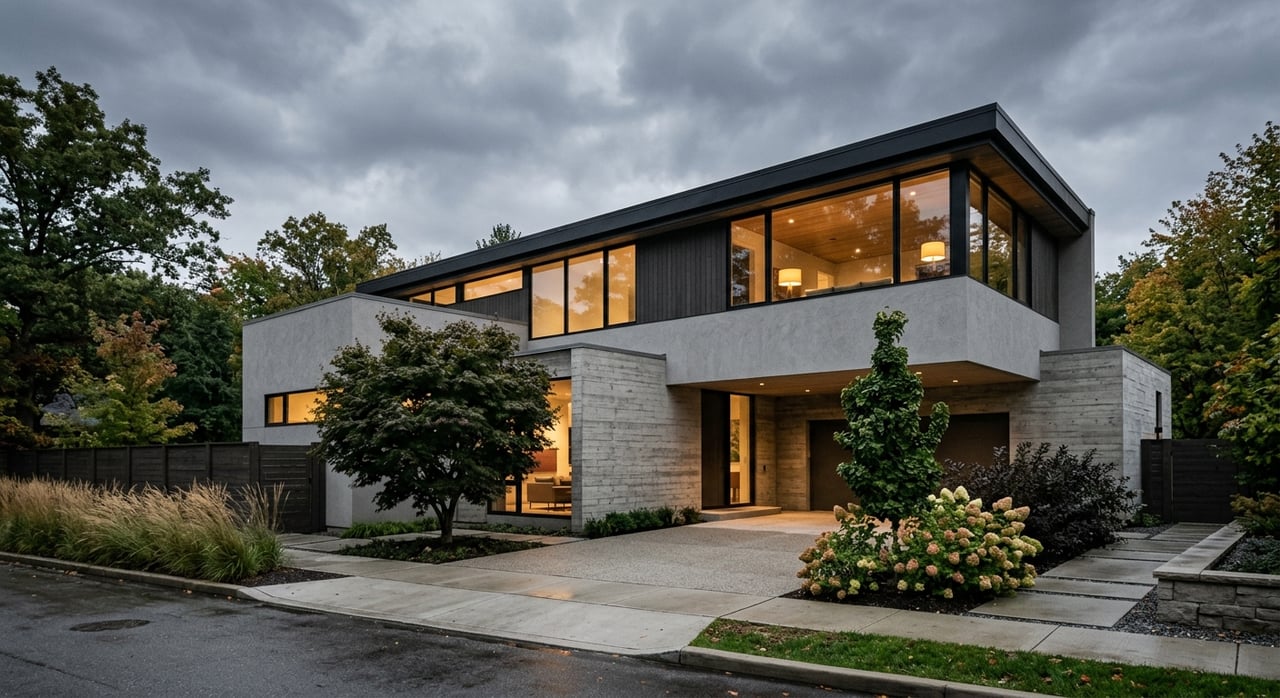
What Sets Luxury Homes in Winchester Apart?
May 7, 2026
May 7, 2026
If you have looked at high-end homes in Winchester, you have probably noticed something right away: luxury here is not just about a big number on the price tag. In a town where historic character, commuter access, and limited land all shape value, the definition of a luxury home is more layered than many buyers and sellers expect. Understanding those layers can help you judge a property more clearly, whether you are shopping for a move-up home or trying to position your own home in the market. Let’s dive in.
In Winchester, a practical working threshold for a luxury single-family home is about $2 million and up. Based on current inventory and recent sales, true trophy properties often move into the $3 million to $4 million-plus range.
That matters because Winchester’s broader single-family market sits lower than that. The Massachusetts Association of REALTORS reported a March 2026 year-to-date single-family median sale price of $1.5582 million, which gives you a cleaner benchmark for detached homes than all-property-type figures.
So yes, price is part of the luxury conversation. But in Winchester, it is really the starting point, not the full definition.
One reason luxury feels different in Winchester is that the town is largely built out. That means there are only so many homes with a prime lot, preserved views, strong privacy, and easy access to the parts of town people use every day.
Winchester also offers a mix that buyers consistently value: preserved open space, scenic ponds, the Town Common, the Town Forest, and access to the Middlesex Fells. At the same time, downtown Winchester includes a Cultural District centered on the Common and the renovated train-station area, with Winchester Center recognized as a National Register Historic District.
That combination creates a rare balance. A home can feel private and tucked away while still offering access to downtown and commuter rail, and that is a major part of what luxury means here.
In many towns, buyers focus first on square footage. In Winchester, land and setting often matter just as much.
The town’s historical framework looks at property context through features like lot size, frontage, landscaping, driveways, outbuildings, and the surrounding setting. In practical terms, that helps explain why a luxury home in Winchester often has more than a large interior. It may also have a larger lot, a cul-de-sac location, conservation adjacency, pond or forest views, or an estate-like yard.
Recent luxury examples reflect that pattern. Current listings have included lots around 0.53 acres, 0.65 acres, and 1.46 acres, showing that outdoor space and site quality are a meaningful part of upper-tier value.
Can an older home still be luxury in Winchester? Absolutely.
Winchester’s architectural history is one of the strongest parts of its identity. The town’s survey notes a wide range of building styles, including Colonial, Georgian, Federal, Greek Revival, Italianate, Second Empire, Queen Anne, Shingle Style, Colonial Revival, Craftsman, Tudor, Modernist, and International.
In the luxury segment, that usually shows up in one of two ways:
That means luxury is not limited to brand-new construction. A well-updated Victorian or Colonial can absolutely compete in Winchester’s top tier when the setting, condition, and finish quality are there.
A home does not become luxurious just because it is large. Buyers in Winchester’s upper-end market expect a level of finish and livability that goes beyond extra rooms.
Across recent listings, recurring luxury signals include:
These features matter because they support how you actually live in the home. In other words, luxury in Winchester is often about how well a property functions day to day, not just how many square feet it offers.
Even though size is not everything, it still matters at the top of the market. Recent high-end Winchester listings show the scale buyers often expect, with homes ranging from about 7,500 to 8,866 square feet, and layouts with 6 to 7 bedrooms and 7 to 7.5 baths.
That kind of space supports flexible living. It can mean room for guest space, private work areas, recreation, and multi-use lower levels, all without making the home feel crowded.
Still, a larger footprint only commands top-tier pricing when it is paired with the right lot, location, design, and finish level. A big house without those supporting factors may not read as true luxury in this market.
In Winchester, where you are can be just as important as what you own.
Luxury buyers often pay close attention to access. That can mean proximity to Winchester Center, access to the Common and local businesses, or convenience to one of the town’s two commuter rail stops: Wedgemere and Winchester Center.
Homes near green space can also stand out. Because Winchester is largely built out, access to preserved woodland, scenic ponds, the Town Forest, and the Middlesex Fells can add meaningful value, even when the lot itself is not unusually large.
School placement can also shape how a home is marketed and perceived. Winchester Public Schools includes five elementary schools, one middle school, and one high school, so elementary attendance area is the school-related factor most likely to vary by address.
That is why you may see luxury listings highlight proximity to a particular elementary school. For example, a current luxury listing on Amberwood is described as being steps from Vinson-Owen Elementary School.
For buyers, this does not mean one factor alone defines value. It simply means address-specific location details can influence demand, especially in a competitive market.
If you are trying to decide whether a home fits Winchester’s luxury tier, this checklist can help:
The more boxes a home checks, the more likely it is to be viewed as luxury in Winchester.
If you own a home in Winchester, it is easy to assume that a large house or expensive renovation automatically places you in the luxury category. But buyers at this level compare more than upgrades.
They are looking at the full picture: lot quality, architectural appeal, setting, location, and how the home lives. A seller who understands that broader lens is in a much better position to price strategically and decide which improvements will actually strengthen market position.
If you are buying in Winchester, it helps to define luxury based on your priorities, not just headline price. For one buyer, luxury may mean a restored historic home close to Winchester Center. For another, it may mean newer construction on a larger lot with more privacy and garage space.
This is also a very competitive market. Redfin describes Winchester as very competitive, with about 4 offers per home, around 27 days on market, and a 99.1% sale-to-list ratio. In that environment, clarity matters. When you know what luxury means to you in this town, you can move faster and make better comparisons.
So what really defines a luxury home in Winchester, MA?
It is not just the price tag. It is the combination of price, scarcity, land quality, architectural character, finish level, and access to the places that shape daily life, from downtown Winchester and commuter rail to open space and address-specific location advantages.
That is what makes Winchester unique. In this market, luxury is less about one single feature and more about how the whole property comes together.
If you are thinking about buying, selling, or pricing a home in Greater Boston’s competitive suburban markets, Zahra Zoglauer can help you evaluate the details that truly drive value and guide your next move with clear, practical advice.


Experience a real estate journey defined by dedication, personalized service, and a deep understanding of Massachusetts’ vibrant communities. Whether you’re buying, selling, or simply exploring, Zahra’s expert guidance ensures a smooth and rewarding process tailored to your needs.