Thinking about buying a two to eight unit in Waltham? The numbers can work if you underwrite with local data and a steady hand. If you want income near major job hubs with manageable vacancy, Waltham’s small multifamily market offers a practical path. In this guide you will learn how to price rents, set vacancy, budget operating costs and taxes, compare cap rates to Newton and Watertown, and size financing and renovations. Let’s dive in.
Why Waltham for small multifamily
Waltham sits in a stable, high-demand rental corridor, supported by strong regional employment and limited new supply. City-level rent trackers show asking rents in the low-to-mid $3,000s depending on unit mix and whether luxury stock is included, which helps frame market-rate comps for renovated units. You can review a current snapshot of city medians on RentCafe for added context on asking rents across bedroom types.
Stabilized vacancy across Greater Boston was recently reported at about 5.8% in Q1 2025, with tighter conditions in mid-market properties than in new Class A stock. That supports using a conservative single-digit vacancy assumption for well-located Waltham assets. Submarket cap-rate reports indicate Waltham typically trades at a modest yield premium to Newton and Watertown, which can benefit cash-on-cash math for smaller deals.
- City rent context: see the latest Waltham asking rent medians on RentCafe’s market trends.
- Metro vacancy: Colliers reported stabilized Greater Boston vacancy near 5.8% in Q1 2025. Review the Greater Boston multifamily report for metro context.
- Cap-rate snapshot: recent broker data shows Waltham/Arlington/Belmont around 5.2% and Brookline/Newton/Watertown around 4.9%, which implies a modest yield premium in Waltham. See the capital markets report.
Large transactions reinforce investor demand. Notably, Gardencrest in Waltham sold in 2024 for reported nine-figure proceeds, and other suburban trades drew institutional buyers. Read a summary of the Gardencrest sale in this Bisnow coverage.
Rent and vacancy snapshot for 02451
Small multifamily rents in 02451 span a wide band. Condition, layout, off-street parking, and in-unit laundry all move the needle. City-level trackers like RentCafe skew toward professionally managed and newer stock, so use them to frame comp ceilings. For underwriting a walk-up or classic triple-decker, lean on unit-level comps within a half mile and recent leases from similar vintage properties.
Vacancy for stabilized, well-located Waltham buildings can be under the metro average. A prudent underwriting range is 3 to 6% vacancy and collection loss for stabilized product, and 5 to 8% for higher-turnover houses. The Colliers Q1 2025 report supports single-digit metro vacancy, which pairs well with local experience in 02451.
Underwrite a Waltham small multifamily
1) Build your income line
- Pull 3 to 5 comps per unit from the past 60 to 120 days within a half mile. Prioritize similar vintage, size, and condition. Use city trackers for context, but price to your immediate comp set. City medians on RentCafe can help you sanity-check upper bounds.
- Add other income where feasible: paid parking, coin-op or app-based laundry, storage, and pet fees.
2) Set vacancy and credit loss
- Stabilized assumption: 3 to 6% for most Waltham 2 to 8 unit buildings, with the higher end for student or seasonal turnover.
- Reference metro trends: the Colliers Greater Boston report supports single-digit vacancy for the region.
3) Budget operating expenses
Use the property’s trailing P&L if available, then normalize with industry benchmarks.
- Real estate taxes: Waltham FY2026 residential rate is $10.32 per $1,000 assessed value. Confirm your classification with the city before finalizing. See the Assessor’s published rates on the City of Waltham site.
- Insurance: older New England buildings often see higher premiums. Budget a per-unit range and verify with quotes.
- Utilities: water, sewer, trash, common-area electric. If heat or hot water is owner-paid, increase your allowance.
- Repairs and maintenance: lenders and appraisers often underwrite total operating expenses in the 40 to 50% range of effective gross income for conventional apartments. For a helpful overview of expense analysis and normalization, review this operating expense guide.
- Management: even if you self-manage, include a market management fee so your numbers pass lender review. A 4 to 8% fee of collected rents is common for small multifamily.
- Replacement reserves: set aside $300 to $1,000 per unit per year depending on age and upcoming capital needs.
4) Compute NOI and value
- Formula: NOI equals effective gross income minus operating expenses.
- To estimate value, divide NOI by a local market cap rate. Broker reports suggest using roughly 5.0 to 5.5% for stabilized Waltham assets, with smaller or hairier deals underwritten at higher yields. See the submarket detail in the capital markets report.
Cap rates and pricing vs Newton and Watertown
Recent broker data suggests Waltham/Arlington/Belmont trade around a 5.2% market cap, while Brookline/Newton/Watertown hover near 4.9%. That slight yield premium in Waltham can improve cash flow and reduce break-even risk compared to lower-yield, closer-in neighbors. Individual 2 to 8 unit properties may price above or below these ranges depending on condition, lease quality, and liquidity, so always comp like-for-like vintage and unit mix.
A worked example for 02451
Here is a simple underwriting walk-through for a hypothetical six-unit in 02451. This is illustrative, not a quote. Always replace assumptions with your actual rent roll, comps, tax estimate, and quotes.
- Unit mix and rents: 4 one-bedrooms at $2,400, 2 two-bedrooms at $3,200. Gross potential rent equals $192,000 per year. These rents sit within recent Waltham listing ranges and are consistent with city-level medians used for context.
- Vacancy and credit loss: 5% assumed. Effective gross income equals $182,400.
- Operating expenses: 45% of EGI as a normalized benchmark equals approximately $82,080.
- Projected NOI: about $100,320.
- Implied value: at a 5.2% cap, value is roughly $1,930,000, or about $322,000 per unit.
Small shifts in rent, vacancy, or expenses can move value meaningfully. Build a quick sensitivity that tests plus or minus 5 to 10% on rents and plus or minus 20% on expenses so you understand your range of outcomes.
Taxes in Waltham: a quick example
Taxes are often your largest single expense. If you estimate taxes using market value, multiply by the published rate. For example, at $2,580,000 of market value, residential taxes at $10.32 per $1,000 would be about $26,586 per year. Confirm your classification and assessed value with the Waltham Assessor since multifamily classification can affect the rate.
Renovation and value-add plays
In Waltham, light to moderate interior upgrades can unlock better rents and shorten lease-up.
- Light refresh: paint, lighting, LVP flooring, updated fixtures. Typical lift can be incremental but helps absorption and optics.
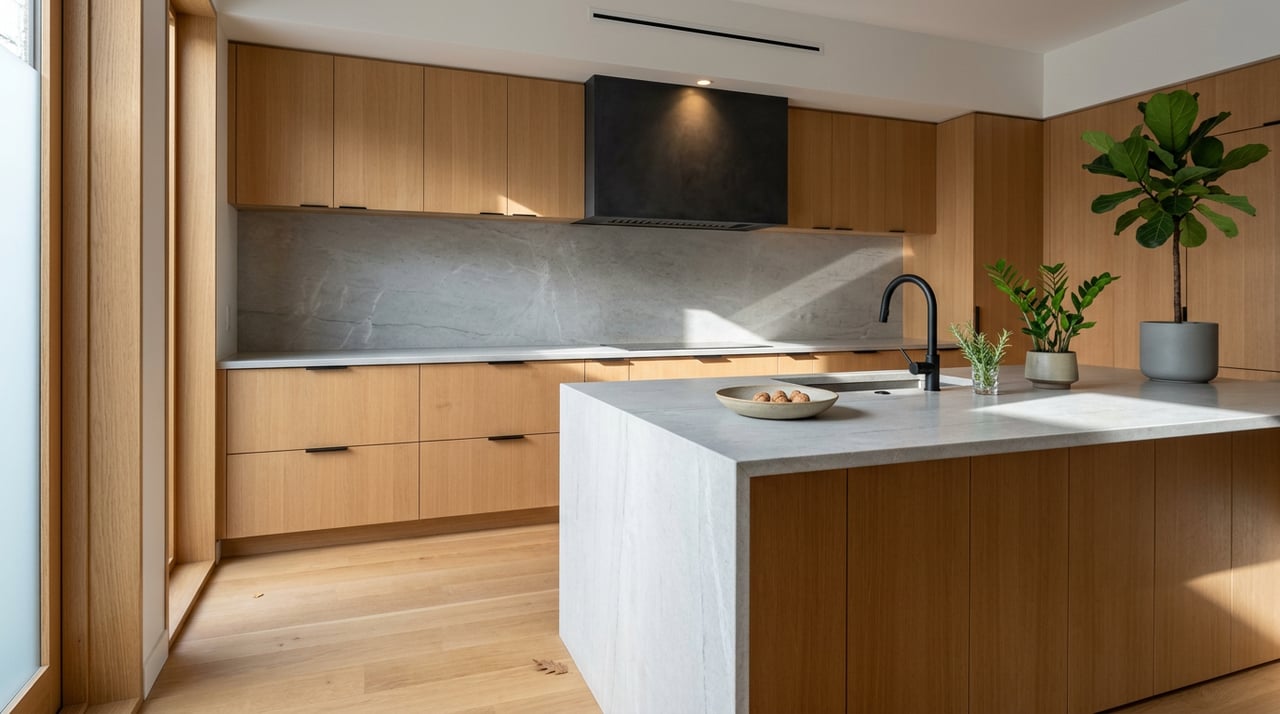
- Moderate upgrade: modernized kitchens and baths, new appliances, and in-unit laundry where feasible can drive clearer rent gains.
- Major reposition: systems, roof, electrical, and layout changes require more capital and time. Many institutional programs report per-unit renovation ranges commonly around $15,000 to $20,000 for typical interiors, with broader value-add projects ranging from $10,000 to $60,000 per unit depending on scope. See renovation cost context in this REIT annual filing.
If you plan structural or unit-addition work, track Massachusetts’ new Accessory Dwelling Unit rules. The 2024 Affordable Homes Act enables ADUs by right in many contexts, and municipalities, including Waltham, are updating local bylaws. Review the state’s ADU guidance and confirm the local permit path before you underwrite any added units.
Financing paths that fit the plan
- 2 to 4 units: owner-occupants can use conventional loans or FHA programs. FHA 203(k) can finance purchase and rehabilitation in one loan if you will occupy a unit. See the FHA consumer overview for 203(k) on HUD’s site.
- 5+ units: stabilized properties may qualify for agency small-balance programs that offer fixed-rate, longer-term options, typically with DSCR and LTV tests. For a primer on features and sizing, read this Fannie Mae small-loan guide.
Whichever path you choose, expect lenders to normalize your P&L, add a management fee even if you self-manage, adjust taxes to a post-acquisition estimate, and require replacement reserves. A quick overview of underwriting adjustments appears in this operating expense guide.
Due diligence checklist for Waltham 02451
Pull these items as soon as your LOI is accepted so you can confirm assumptions before you commit hard money.
- Rent roll, leases, security deposit ledger, and any concessions
- Utility setup and meters, parking arrangements, laundry income records
- Two to three years of P&Ls, vendor contracts, maintenance logs
- Full building inspections: structural, roof, electric, plumbing, heating, and lead for pre-1978 buildings
- Code and life-safety certificates, smoke and CO compliance
- Title, survey, easements, and zoning confirmation for any planned ADU or unit changes
- Tax classification and assessed value check with the Waltham Assessor
Putting it all together
Strong small-multifamily deals in Waltham come down to disciplined comping, realistic vacancy, tight expense control, and a cap-rate target that reflects local trades. The upside often lies in consistent interior upgrades and operational polish rather than speculative leaps. If you size your debt to weather normal turnover and normalize taxes and reserves from day one, you give yourself room to operate and to improve.
If you want a second set of eyes on a rent roll, a pro forma, or renovation plan, I am here to help. As a Watertown-based advisor who regularly works across Waltham, Newton, Belmont, and Arlington, I bring local rental comps, construction insight, and pragmatic underwriting to your search. When you are ready, let’s review your target building together and map the steps to a clean close and a solid first year.
Ready to evaluate a Waltham multifamily or build a buy box? Reach out to Zahra Zoglauer to schedule a consultation.
FAQs
How do I estimate market rent for a Waltham 2-bedroom in 02451?
- Start with three to five recent comps within a half mile for similar vintage and size, then sanity-check the range against city-level medians like those on RentCafe’s Waltham page. Condition, parking, and laundry access can shift price.
What vacancy rate should I underwrite for a small Waltham building?
- For stabilized properties, 3 to 6% is a prudent range. The Colliers Greater Boston report supports single-digit vacancy, with mid-market properties tighter than new Class A stock.
What cap rate should I use to value a Waltham 6-unit?
- Recent broker data indicates around 5.0 to 5.5% for stabilized Waltham assets, versus lower yields near 4.9% in Newton and Watertown. See submarket detail in the capital markets report.
How do Waltham property taxes factor into underwriting?
- Use the published FY rate times assessed or projected value. The FY2026 residential rate is $10.32 per $1,000. Confirm classification and assessment on the Waltham Assessor’s page.
Can I finance renovations and the purchase together on a duplex or triplex?
- Yes, if you plan to occupy a unit. FHA 203(k) bundles purchase and rehab into one loan. Review eligibility and basics in HUD’s 203(k) consumer guide.
What renovation budget should I expect per unit in Waltham?
- Many organized programs report interior renovations around $15,000 to $20,000 per unit, with broader scopes ranging from $10,000 to $60,000 depending on systems and finishes. See market context in this REIT filing.