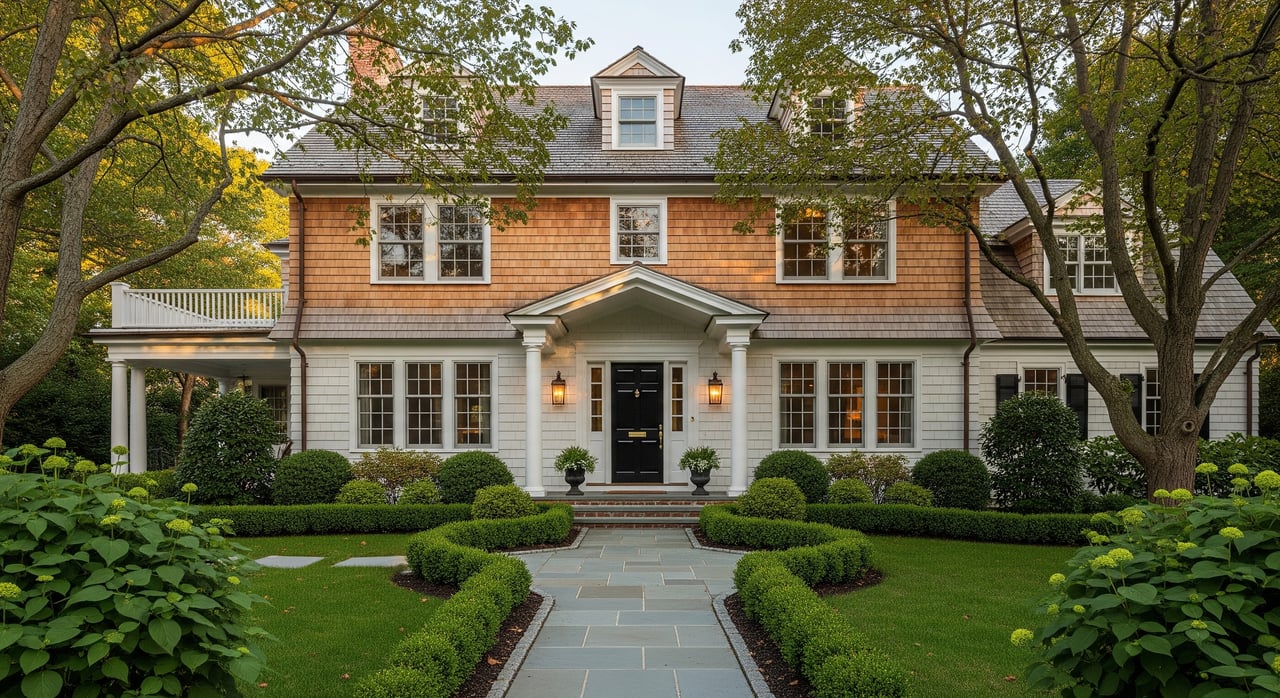
Smart Pricing Strategy for Newton Sellers Seeking Multiple Offers
January 1, 2026
January 1, 2026
Are you wondering how to price your Newton home so buyers compete on day one? You are not alone. In a market where mortgage rates have shifted and buyers are selective, the right pricing strategy can make the difference between a single offer and a bidding war. In this guide, you will learn a data-first framework that maps your home to the right village-level price band, taps into real buyer search behavior, and pairs smart pricing with pre-market prep to widen your buyer pool. Let’s dive in.
Newton sits inside a cluster of high-demand Greater Boston suburbs where buyers value convenience, transit access, and stable neighborhoods. It is made up of distinct villages like Newton Centre, Newton Highlands, Waban, Newtonville, West Newton, Auburndale, Nonantum, Chestnut Hill, and the Falls. Each village offers a unique mix of commute options, housing styles, and proximity to daily needs.
Buyer interest often rises for homes near MBTA Green Line stops, commuter rail, or major routes like I‑90 and I‑95. Many buyers also weigh proximity to schools and parks when comparing homes within the same village. Seasonally, spring brings the most showings and the highest likelihood of multiple offers. Late fall and winter can still yield strong results, but pricing and marketing need to work harder to spark competition.
You do not price a Newton home off citywide averages. You price it against the specific micro-market that matches your property.
Start by segmenting your home within its village and product type. Compare single-family to single-family, condo to condo, and townhome to townhome. Then narrow by finished square footage, lot size and yard, architectural style, and level of updates. Transit proximity and school assignment within the village can also influence demand and price.
Pull three comp categories for the last 3–6 months, extending to 12 months if needed:
Match on bedrooms, baths, finished square footage, condition, lot, and location. If you need to stretch beyond exact matches, use clear adjustments and note the rationale.
Adjust your comps for finished square footage, bed and bath count, kitchen and bath renovations, systems updates, garage and outdoor spaces, and proximity to transit or village centers. Create two scenarios for list price:
Bands help you target the largest pool of buyers searching your village at your price level.
Collect recent closed sales in your village and calculate the 25th, 50th, 75th, and 90th percentiles for both sale price and price per square foot. Then translate those percentiles into four bands:
This turns vague “comps” into a structure that reflects how buyers segment your area and product type.
Many buyers set hard max-price filters. Round thresholds like 1,000,000, 1,250,000, and 1,500,000 often define what a buyer even sees online. A small price shift just below a threshold can place your home in far more saved searches.
If you are on the edge of a threshold, pricing at 999,000 instead of 1,001,000 can produce a visible jump in traffic. That expanded exposure can be the spark that creates multiple offers.
As a rule of thumb, you can map your home to your village median for a property type:
Positioning at the bottom of a higher band or just under a filter threshold can have very different outcomes. The best choice is the one that maximizes buyer eyeballs for your actual product and condition.
Not every property should be underpriced. The right tactic flows from your goals, the comp set, and current inventory in your village.
If inventory is limited and recent pendings look strong, list slightly under a round-number threshold to boost search visibility and drive showings. Pair this with a tight first-weekend schedule and an offer review deadline to concentrate demand. This works best when your home presents cleanly and comps show buyer urgency.
If your home is meaningfully superior to the comp set, price at the top of your band and showcase why. Use professional staging, high-impact photos, and floorplans. Back up the price with transparent documents like permits and service records. A well-supported premium price can still generate multiple offers if it outclasses nearby options.
Consider an offer review deadline after the first weekend, such as Sunday at 5 pm. This gives buyers a fair chance to tour, discuss terms, and submit complete offers. Communicate the plan clearly and align with Massachusetts and MLS rules to ensure broad and fair access for all buyers.
When appropriate, a pre-listing inspection, permit history, and recent systems service records can encourage cleaner terms. Buyers write stronger offers when they understand the property and can move with confidence.
Your goal is to make it easy for more buyers to say yes on day one. Smart prep can nudge your home into a higher band while keeping costs reasonable.
When buyers have answers in hand, they are more willing to submit firm, clean offers.
A short coming-soon period can build momentum before your official go-live, provided you follow MLS PIN rules. Combine this with broker previews, targeted outreach to local buyer agents, and high-quality social content. Offer virtual tours and clear floorplans to attract relocating buyers who compare Newton with nearby metros.
Multiple offers are only helpful if you can compare them apples to apples.
Create a simple spreadsheet to score each offer on:
This makes it easier to see which offer truly protects your outcome.
If several offers are close, consider countering for stronger earnest money, shorter contingency windows, or flexible occupancy instead of only chasing a higher price. Be thoughtful with escalation clauses. They can be powerful but need clear rules and documentation.
Higher mortgage rates can trim purchasing power, which concentrates demand at certain price points and bands. In that environment, small price adjustments near key thresholds can have outsized effects on how many buyers actually see your listing. The right strategy balances exposure, presentation, and a realistic appraisal pathway so your accepted offer reaches the closing table.
A strong Newton launch blends micro-market data, price-band precision, and polished presentation. When you align price with buyer search behavior and remove friction, you invite more qualified buyers to compete. If you want a consultative, numbers-forward plan for your village and property type, reach out. I will build your comp set, model scenarios, and guide you from prep to offer selection with clear, calm advice.
If you are planning to list in Newton or a nearby inner-ring suburb, let’s talk about your goals and timeline. Get started with a brief strategy call or a valuation review from Zahra Zoglauer.


Experience a real estate journey defined by dedication, personalized service, and a deep understanding of Massachusetts’ vibrant communities. Whether you’re buying, selling, or simply exploring, Zahra’s expert guidance ensures a smooth and rewarding process tailored to your needs.